
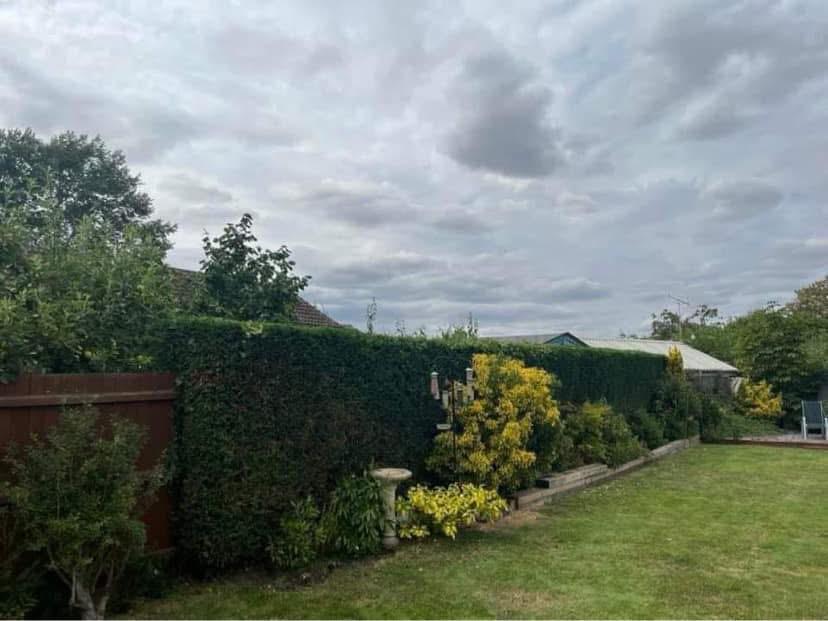
When Does a Fence Need Replacing?
Glasgow's west coast weather is notoriously hard on garden fences. High winds, persistent rain, and frost cycles can turn a solid fence into a leaning, rotting eyesore within a few years — especially if the original installation used budget materials or poor post foundations.
Common signs your fence needs replacement rather than repair:
• Multiple posts are rotten at ground level • Panels are warped, split, or detached • The fence leans significantly and can't be straightened • Storm damage has affected more than 30% of the fence line • The fence is over 10–15 years old and showing widespread deterioration
If only one or two panels are damaged, repair might be sufficient. But if the posts are failing, replacement is almost always more cost-effective than repeated patching.
Choosing the Right Fencing Material
The material you choose determines how long your fence lasts, how much maintenance it needs, and how it looks. Here are the main options we install across Glasgow and West Dunbartonshire:
Pressure-Treated Timber The most popular and affordable option. Modern pressure-treated softwood panels and posts resist rot for 15–20 years. We use heavy-duty posts (100mm x 100mm minimum) and high-quality panels rather than wafer-thin budget alternatives. Suitable for most residential properties in Paisley, Renfrew, and Erskine.
Composite Fencing A premium option that's maintenance-free, won't rot, warp, or need painting. Composite fencing handles Glasgow's wind and rain exceptionally well. Higher upfront cost but zero ongoing maintenance makes it excellent value over 25+ years. Increasingly popular in Bearsden, Milngavie, and Bishopbriggs.
Metal Fencing Aluminium and steel fencing suits modern properties and provides excellent security. Powder-coated finishes resist Scottish weather conditions. Ideal for front boundaries where visibility is important.
Post Installation Methods That Last
The most common reason fences fail in Glasgow isn't panel damage — it's post failure. The post is the foundation of your fence, and getting this right is the difference between a fence that lasts 5 years and one that lasts 20.
We use three post installation methods depending on the situation:
Concrete-Set Posts Timber posts set in concrete provide the strongest foundation for most residential fences. We dig to a minimum 600mm depth and use a concrete collar that extends above ground level to keep the timber away from wet soil. This is our standard method for exposed properties across Dumbarton, Clydebank, and Helensburgh.
Metal Post Supports Galvanised metal post supports — either bolt-down or drive-in — keep the timber completely out of the ground. This dramatically extends post life and makes future replacement easier. Ideal for areas with very wet or clay-heavy soil, which is common across much of West Dunbartonshire.
Concrete Posts For maximum longevity, concrete posts with gravel board systems eliminate rot entirely. Combined with timber or composite panels, a concrete post fence can last 30+ years. Popular for boundary fences along public paths and in exposed locations.
Boundary Responsibilities and Regulations
Before replacing a fence, it's important to understand boundary responsibilities:
• In Scotland, there's no automatic rule about who owns which fence. Check your title deeds. • Fences up to 2 metres in height generally don't need planning permission in residential areas • Conservation areas may have additional restrictions — relevant for parts of Bearsden, Milngavie, and Helensburgh • If your fence borders a public path, height restrictions may apply
We always recommend discussing fence replacement with neighbours before starting. A new fence benefits both properties, and neighbours sometimes agree to share costs. We can provide separate quotations to facilitate this.
Fencing Costs in Glasgow
Fencing costs depend on material, length, and site conditions. Here are typical price ranges per linear metre for supply and installation in Glasgow:
• Standard timber panels with concrete posts: £65–£90 per metre • Premium timber with metal post supports: £85–£120 per metre • Composite fencing: £120–£180 per metre • Metal fencing: £100–£200 per metre
These prices include removal and disposal of the old fence, which we handle as standard. Factors that can increase costs include difficult access (rear gardens with no vehicle access), steep gradients, and rocky ground.
We provide free, no-obligation quotations for all fencing work. Our prices are transparent and itemised so you know exactly what you're paying for.
Get Your Free Fencing Quote
Whether you need a single panel replaced or an entire garden perimeter refenced, we're here to help. We install fencing across Glasgow, Dumbarton, Clydebank, Paisley, Bearsden, Milngavie, Helensburgh, Bishopbriggs, Renfrew, Alexandria, Erskine, and Kirkintilloch.
Contact us today for a free site visit and quotation. We'll assess your boundary, discuss material options, and provide a clear price — typically within 48 hours of your enquiry.
Frequently Asked Questions
How long does fence installation take?
Most residential fence replacements take 1–2 days. Larger properties or complex installations with retaining elements may take 3–4 days.
Do you remove the old fence?
Yes. Removal and disposal of your existing fence is included in all our fencing quotations as standard.
Can you install fencing on a slope?
Absolutely. We either step the fence panels to follow the slope or rack them at an angle. We'll recommend the best approach for your specific garden.