
Retaining Walls
Retaining Wall Installation
in Glasgow & West Dunbartonshire
Engineered retaining walls that hold back soil, create usable terraces, and protect your property from ground movement — built on proper foundations with structural integrity guaranteed.
Specialist retaining wall construction — fully insured, properly engineered, 5-year workmanship guarantee.
What Are Retaining Walls — And When Do You Need One?
A retaining wall is a structure designed to hold back soil at different levels, preventing earth from sliding or eroding downhill. They're used to create level terraces in sloped gardens, support raised planting beds, stabilise banks and embankments, and protect structures from ground pressure.
Retaining walls are essential for homeowners with sloped gardens who want usable outdoor space. A steeply sloped garden is largely unusable without terracing — and terracing requires retaining walls built to withstand the lateral pressure of the soil behind them.
You need a retaining wall when ground levels change significantly — between your garden and a neighbour's, between your house and the road, or between different areas of your own garden. Existing walls that are leaning, cracking, or bulging also need professional replacement before they fail.
Professional construction is non-negotiable for retaining walls. Unlike a decorative garden wall, a retaining wall must resist continuous soil pressure, water pressure, and sometimes the weight of structures above. A wall built without proper foundations, drainage, and engineering fails — often suddenly and dangerously.
Don't Wait Until It's Too Late
What Happens When a Retaining Wall Fails
A failed retaining wall doesn't just look bad — it's dangerous. When a wall collapses, tonnes of soil move with it, burying gardens, damaging buildings, blocking access, and potentially injuring anyone nearby. The cost of clearing and rebuilding after a collapse is typically 3–5 times the cost of building correctly in the first place.
The most common cause of retaining wall failure is water pressure. Soil behind a retaining wall absorbs rainfall, becoming heavier and exerting more pressure on the wall. Without adequate drainage behind the wall, this hydrostatic pressure builds until the wall is pushed outward or collapses entirely.
Walls built without proper foundations are another major failure point. A retaining wall needs a concrete footing below ground level, sized to the height and loading of the wall. Walls built directly on topsoil or with inadequate footings shift, settle unevenly, and crack.
Many homeowners don't realise their existing retaining wall is failing until it's too late. Warning signs include leaning, horizontal cracking, bulging, separation at joints, and soil appearing through gaps. If you notice any of these signs, professional assessment is urgent — a wall showing these symptoms is close to failure.
How It Works
Our Proven Retaining Walls Process
Step 1
Free Site Assessment
We survey the site, measure height differences, assess soil conditions, and determine the structural requirements of the wall. You receive a detailed quote covering foundations, drainage, wall construction, and finishing.
Step 2
Foundation Preparation
We excavate to a stable bearing layer and pour a reinforced concrete footing sized to the wall's height and the soil pressure it will resist. The foundation is the most critical element — we never skimp on this step.
Step 3
Drainage Installation
We install drainage behind the wall — typically a perforated pipe in a gravel bed with weep holes through the wall face. This prevents hydrostatic pressure build-up, the primary cause of retaining wall failure.
Step 4
Wall Construction
The wall is built using your chosen material — natural stone, concrete blocks, reconstituted stone, or timber sleepers. Each course is checked for level and plumb. Walls over 1 metre include reinforcement as needed.
Step 5
Backfilling & Finishing
Free-draining material (gravel/crushed stone) is placed behind the wall to aid drainage. The top is capped or finished to your specification. Soil is graded, and the area is left clean and ready for planting or turfing.
The Oaklands Advantage
Why Homeowners Choose Us for Retaining Walls
Transform Unusable Slopes into Level Space
Retaining walls create flat terraces from sloped ground — giving you usable lawn, patio, or planting areas where you previously had an inaccessible bank.
Protect Your Property from Ground Movement
Soil erosion and ground movement threaten foundations, driveways, and paths. A properly engineered retaining wall stops this permanently.
Engineered Foundations, Not Guesswork
Every wall we build starts with a reinforced concrete footing designed for the specific height and loading. This is why our walls last 50+ years.
Drainage Built In as Standard
Hydrostatic pressure is the number one cause of wall failure. We install drainage behind every retaining wall — it's included in every quote, not an optional extra.
Wide Range of Materials & Finishes
From rustic natural stone to clean concrete blocks to contemporary timber sleepers, we build walls that match your garden's style while delivering structural integrity.
5-Year Workmanship Guarantee
Every retaining wall is backed by our 5-year guarantee covering foundations, drainage, wall construction, and capping.
In-Depth
Retaining Walls — What You Need to Know
Natural Stone Retaining Walls
Natural stone retaining walls offer the most attractive, traditional appearance. We use locally sourced sandstone, whinstone, and granite to create walls that blend naturally with Scottish landscapes. Stone walls can be built in dry-stone or mortared construction depending on height and loading requirements.
Dry-stone retaining walls (without mortar) are suitable for walls up to 1 metre and have the advantage of being inherently free-draining. Mortared stone walls are used for taller structures and areas requiring a smoother finish. Both types need proper foundations and backfill drainage.
Concrete Block Retaining Walls
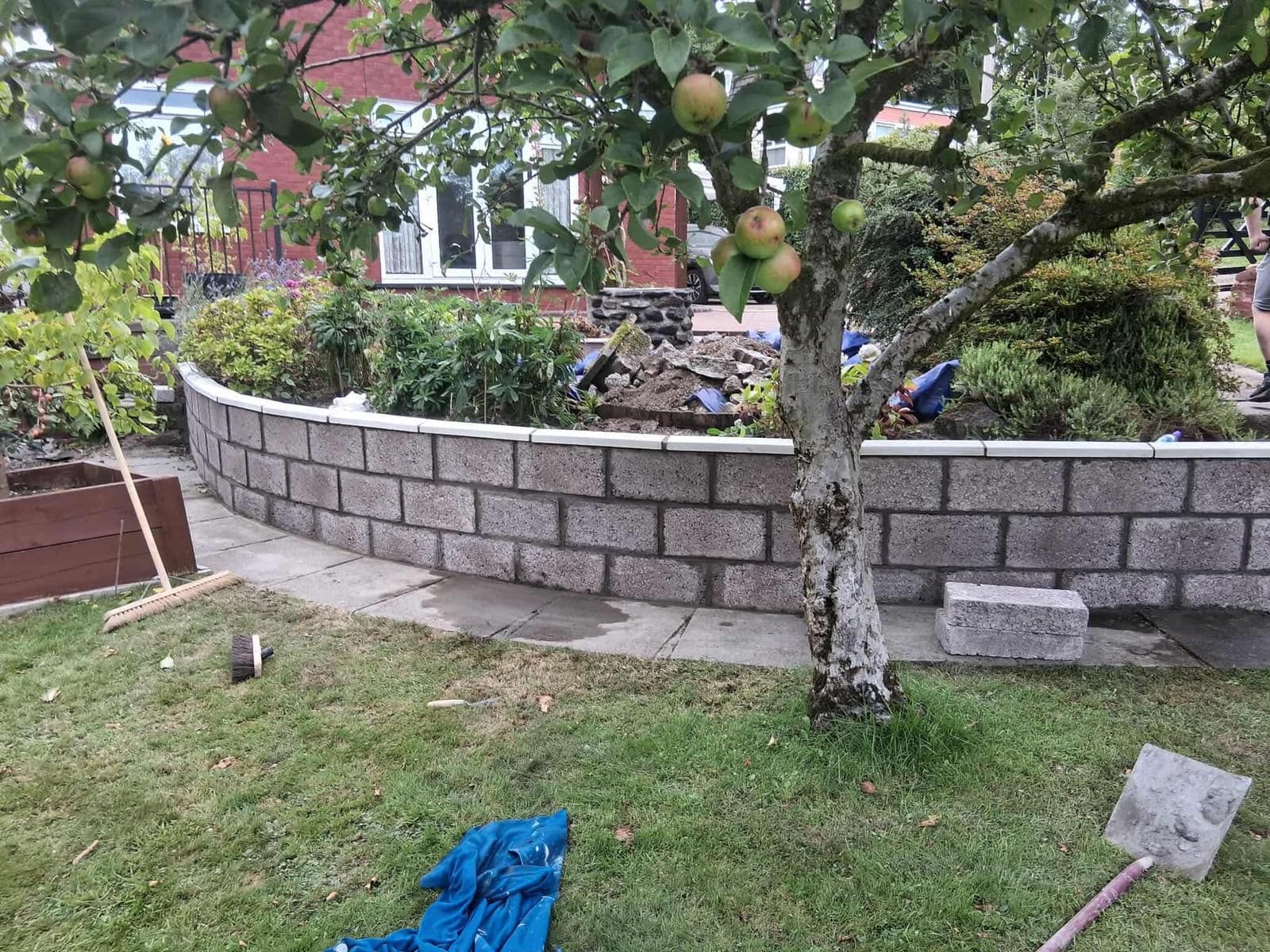
Concrete block is the most cost-effective and structurally consistent retaining wall material. Standard blocks, split-face blocks, and reconstituted stone blocks are available in a range of colours and textures. For walls over 1.2 metres, we use reinforced hollow blocks with steel rebar and concrete fill.
Concrete block walls can be rendered, clad with stone facing, or left in their finished face for a clean, modern look. They're particularly suitable for long runs, garden boundaries, and situations where a consistent, straight wall line is required.
Timber Sleeper Retaining Walls
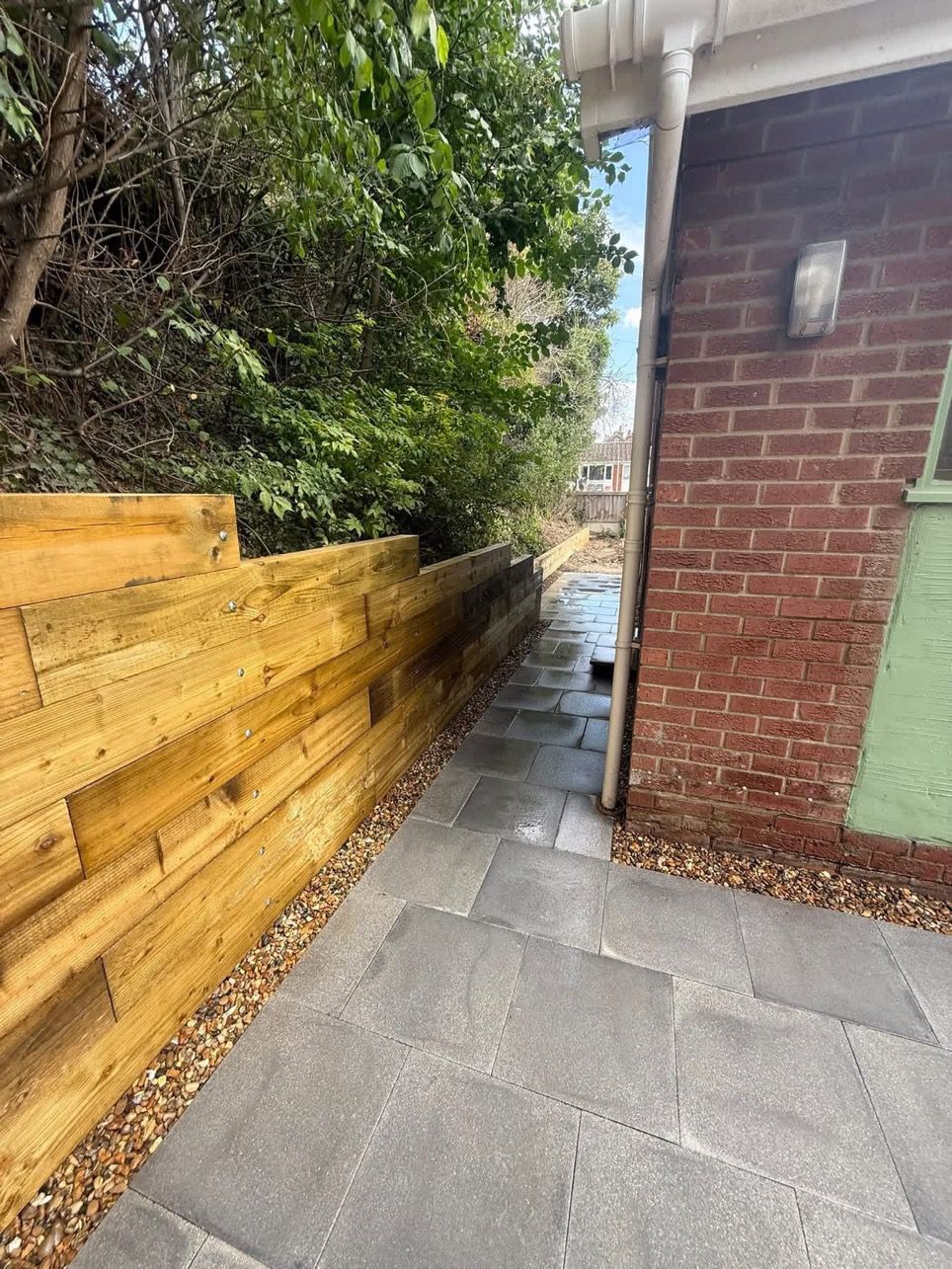
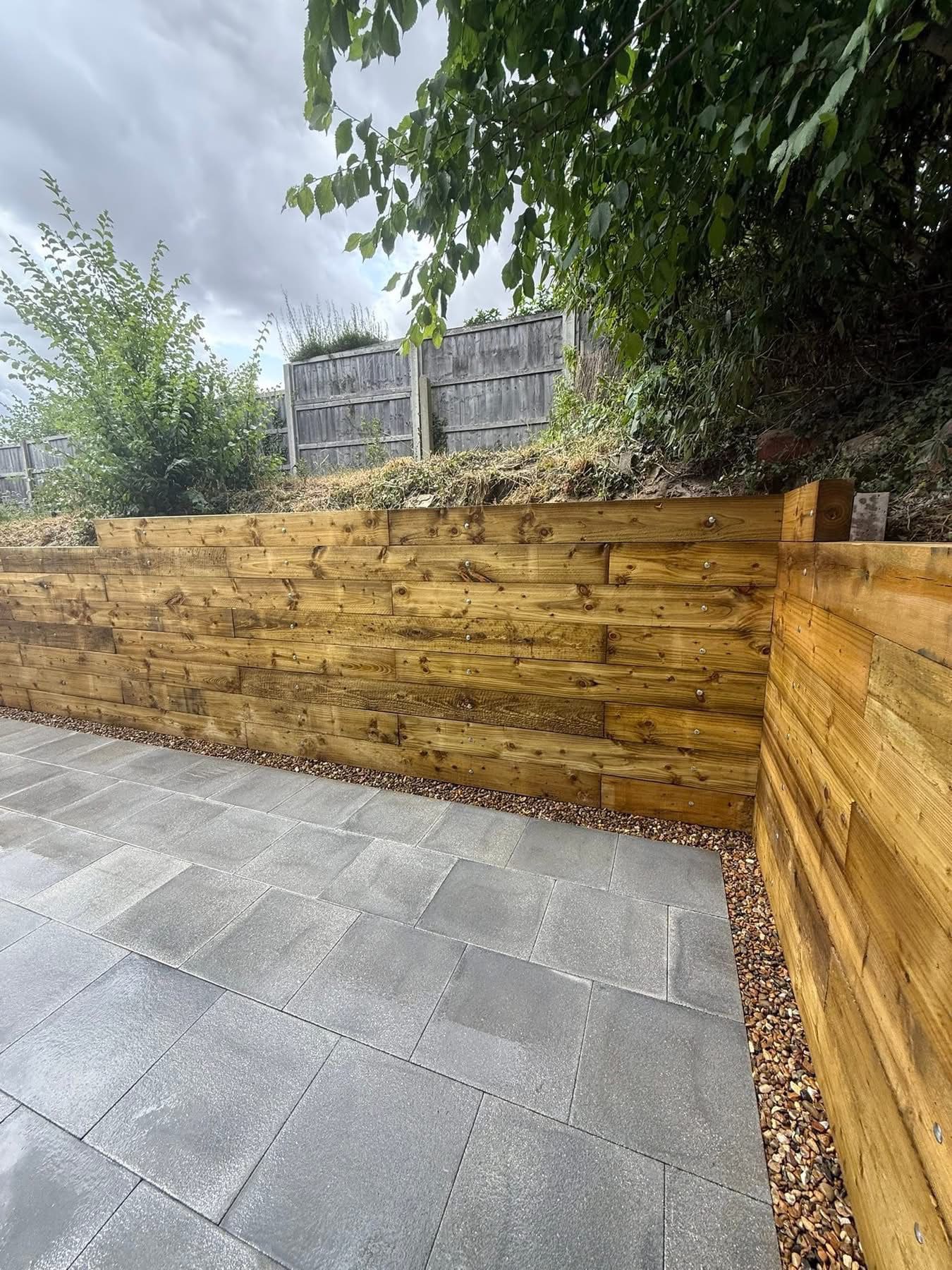
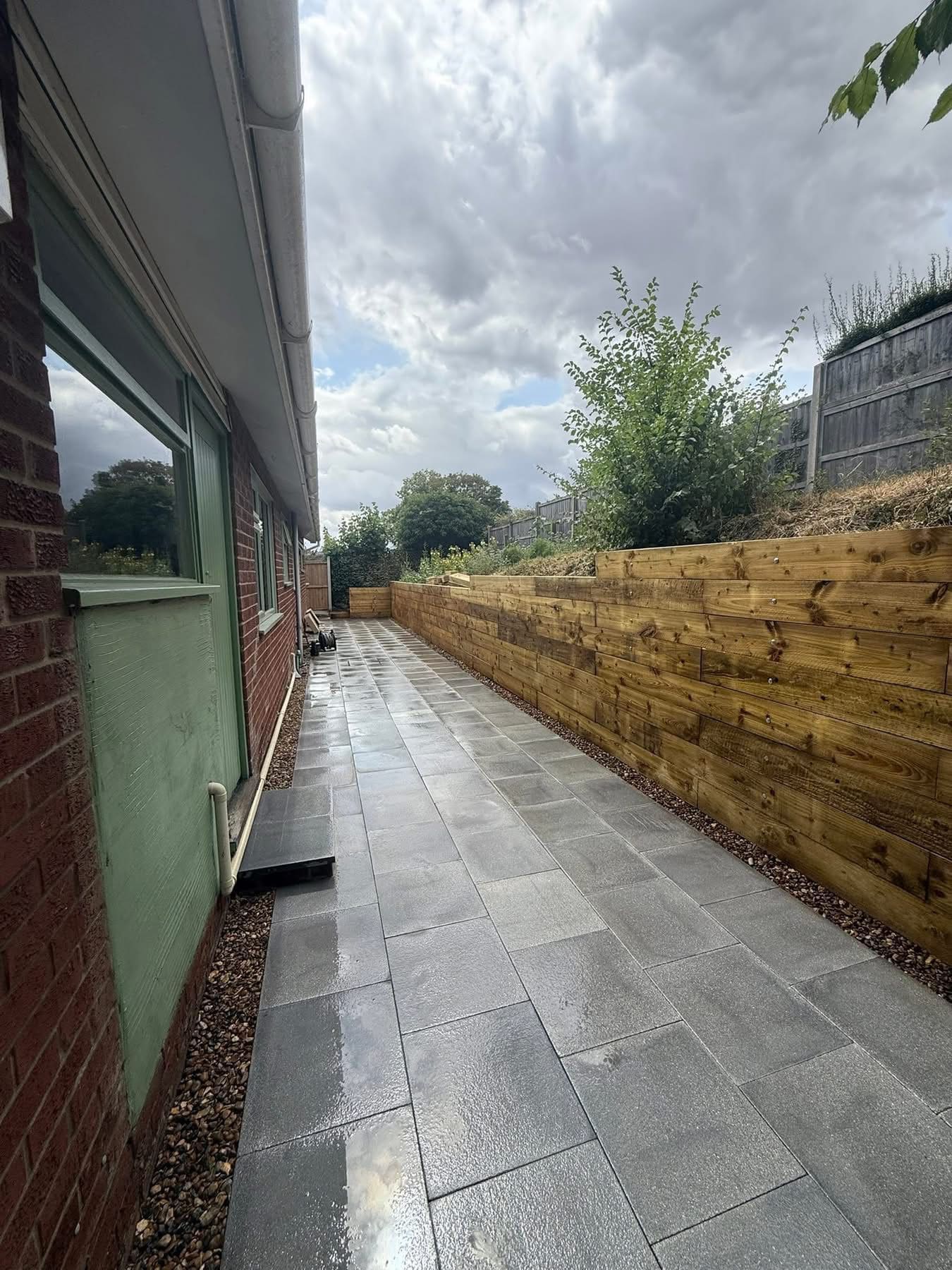
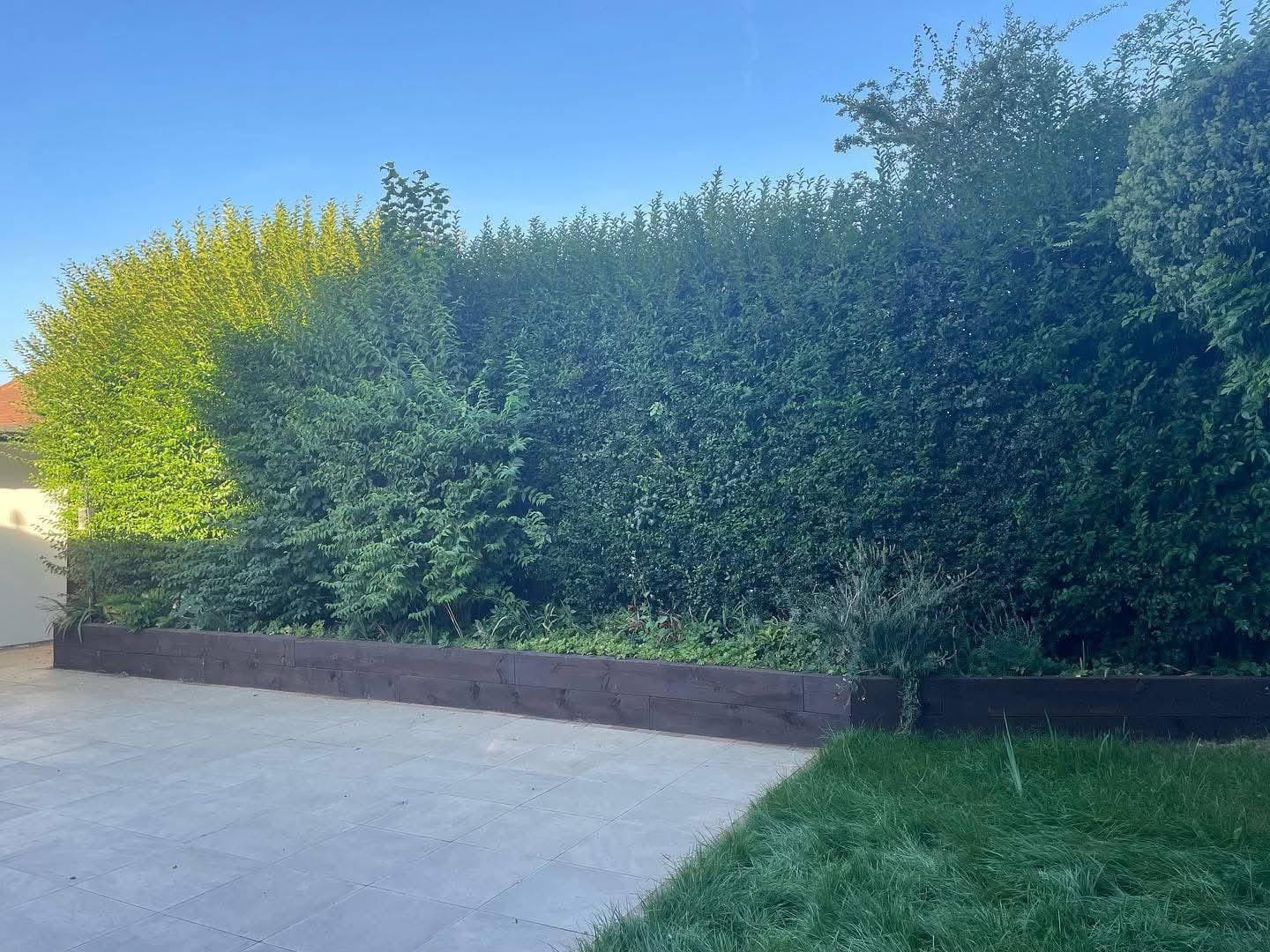
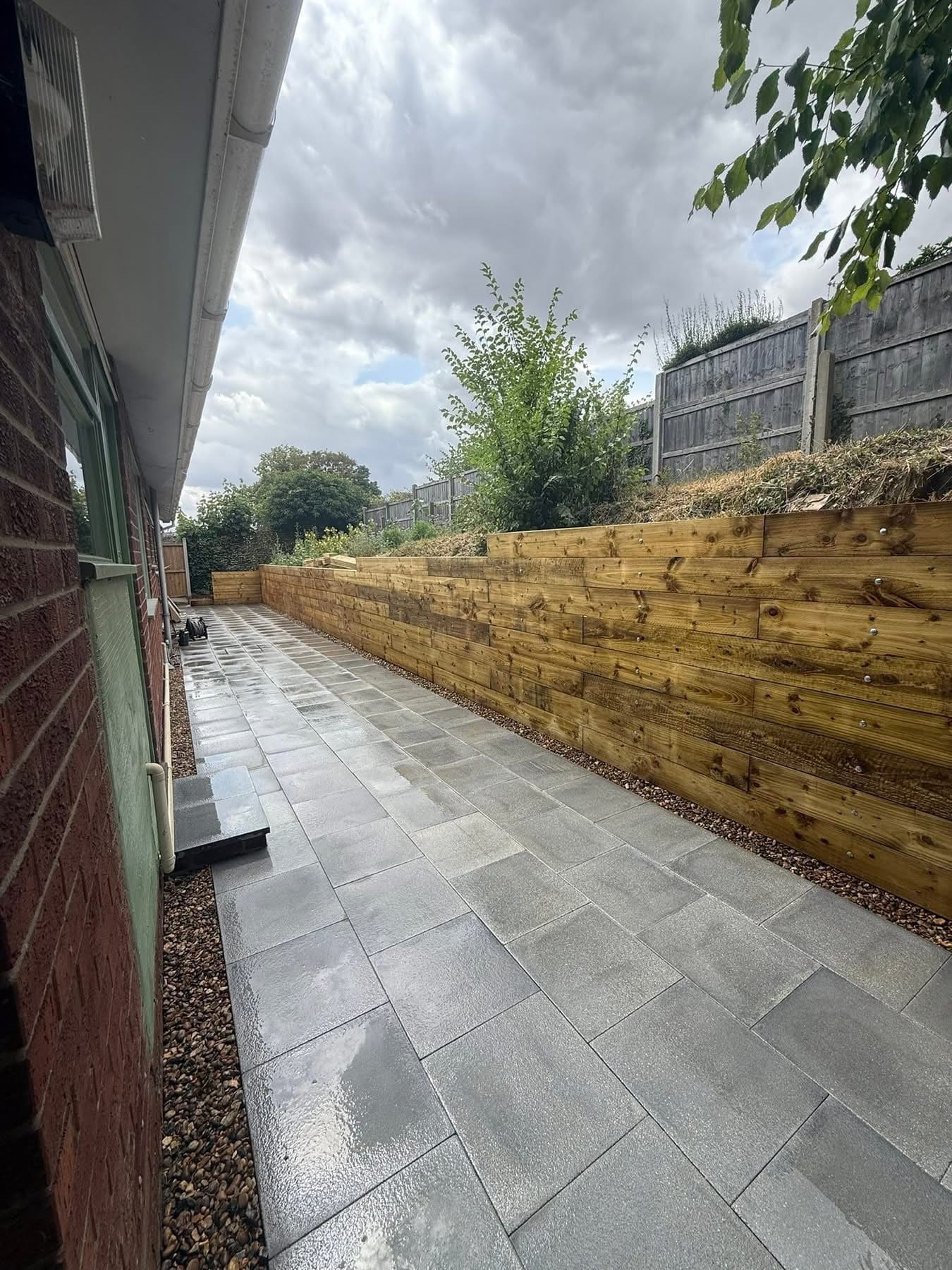
Timber sleeper walls offer a warm, contemporary aesthetic that suits modern gardens. We use new hardwood or treated softwood sleepers (not reclaimed railway sleepers, which contain creosote and are unsuitable for garden use). Sleepers are stacked horizontally and secured with rebar driven into the ground.
Timber sleeper walls are suitable for heights up to 1 metre. For taller requirements, we combine sleepers with steel posts or use alternative materials. Drainage is particularly important behind timber walls to prevent water contact that accelerates rot.
Gabion Retaining Walls
Gabion walls use wire mesh baskets filled with stone, creating a massive, visually striking retaining structure. They're inherently free-draining, extremely strong, and require minimal foundation work. Gabions are ideal for large retaining walls, boundary features, and commercial applications.
We supply gabion baskets in standard and custom sizes, filled with your choice of stone — from rustic rubble to clean, uniform aggregate. Gabion walls are particularly effective on sites with poor ground conditions where traditional foundations are impractical.
When Planning Permission Is Required
Retaining walls under 1 metre generally don't require planning permission in Scotland, unless they're on a boundary with a road or in a conservation area. Walls over 1 metre, or any wall that will bear significant loading (vehicles, structures above), may require a building warrant.
We advise on planning requirements during our initial assessment and handle applications where needed. Building a retaining wall without required permissions can result in enforcement notices and the cost of demolition — a risk we eliminate by checking before we start.
Got Questions?
Frequently Asked Questions About Retaining Walls
How much does a retaining wall cost in Glasgow?
Retaining wall costs depend on height, length, material, and ground conditions. Timber sleeper walls start from £150 per linear metre. Natural stone walls range from £200–£400 per linear metre. Concrete block walls fall between the two. We provide free, detailed quotes.
How high can a retaining wall be?
For residential projects, most retaining walls are 0.5–1.5 metres. Walls over 1 metre may require building control approval. For greater height changes, we build stepped walls (multiple lower walls) which are structurally more efficient and visually appealing.
Do retaining walls need drainage?
Absolutely — drainage is the single most important element after foundations. We install drainage behind every retaining wall we build. Without it, water pressure will eventually push the wall forward and cause failure.
How long does a retaining wall last?
A properly built retaining wall lasts 50+ years. Natural stone and concrete block walls often last indefinitely. Timber sleeper walls typically last 20–25 years before the timber needs replacing.
Can you replace a failing retaining wall?
Yes. We carefully demolish failed walls, excavate proper foundations, install drainage, and rebuild with appropriate materials. If the original wall failed, we identify and address the cause to prevent recurrence.
Do I need planning permission for a retaining wall?
Walls under 1 metre typically don't require permission in Scotland. Taller walls, walls on road boundaries, and walls bearing loading may need approval. We check and advise during our initial assessment.
What material is best for retaining walls?
Natural stone offers the best appearance. Concrete blocks provide the best structural consistency. Timber sleepers give a contemporary look for lower walls. We recommend based on height, loading, budget, and style preference.
How long does retaining wall installation take?
A typical residential retaining wall (5–15 metres long, up to 1 metre high) takes 3–5 working days including foundation and drainage. Larger or taller walls take proportionally longer.
Can you build terraced walls on steep slopes?
Yes. Multi-level terracing is one of our specialist areas. We create stepped retaining walls that transform steep, unusable slopes into multiple level garden areas for lawn, planting, or patio use.
What guarantee do you offer?
All retaining wall installations come with our 5-year workmanship guarantee covering foundations, drainage, wall construction, and capping.
Related Services
We Serve These Areas
Ready for a Free
Retaining Walls Estimate?
Tell us about your project. We'll visit your property, assess the work, and provide a clear, honest quote — no obligation, no pressure, no hidden costs.
Fully insured · £5M public liability · Same-day response · 5-year workmanship guarantee