
The Sloped Garden Challenge in Glasgow
Greater Glasgow's geography means sloped gardens are incredibly common. From the hillside properties of Bearsden and Milngavie to the valley-side homes of Dumbarton and Alexandria, many homeowners are dealing with gardens they can barely use because of steep gradients.
A sloped garden isn't just inconvenient — it can cause real problems. Soil erosion, waterlogging at the base, difficulty maintaining a lawn, and limited usable space all reduce your garden's value and enjoyment.
Retaining walls offer the definitive solution. By creating level terraces from a sloping plot, you can transform wasted space into usable garden areas — perfect for patios, lawns, planting beds, or play areas.
Types of Retaining Walls We Install
At Oaklands Treecare & Landscapes, we install several types of retaining walls depending on the height required, soil conditions, and aesthetic preference:
Natural Stone Retaining Walls Built from locally sourced or imported stone, these walls offer a classic appearance that suits period properties and rural settings. Ideal for walls up to 1.2m in height. Popular in Helensburgh, Bearsden, and Milngavie.
Concrete Block Retaining Walls Engineered concrete blocks provide exceptional structural strength for taller walls. They can be rendered, clad, or left exposed depending on the desired finish. Common in new-build developments across Bishopbriggs and Kirkintilloch.
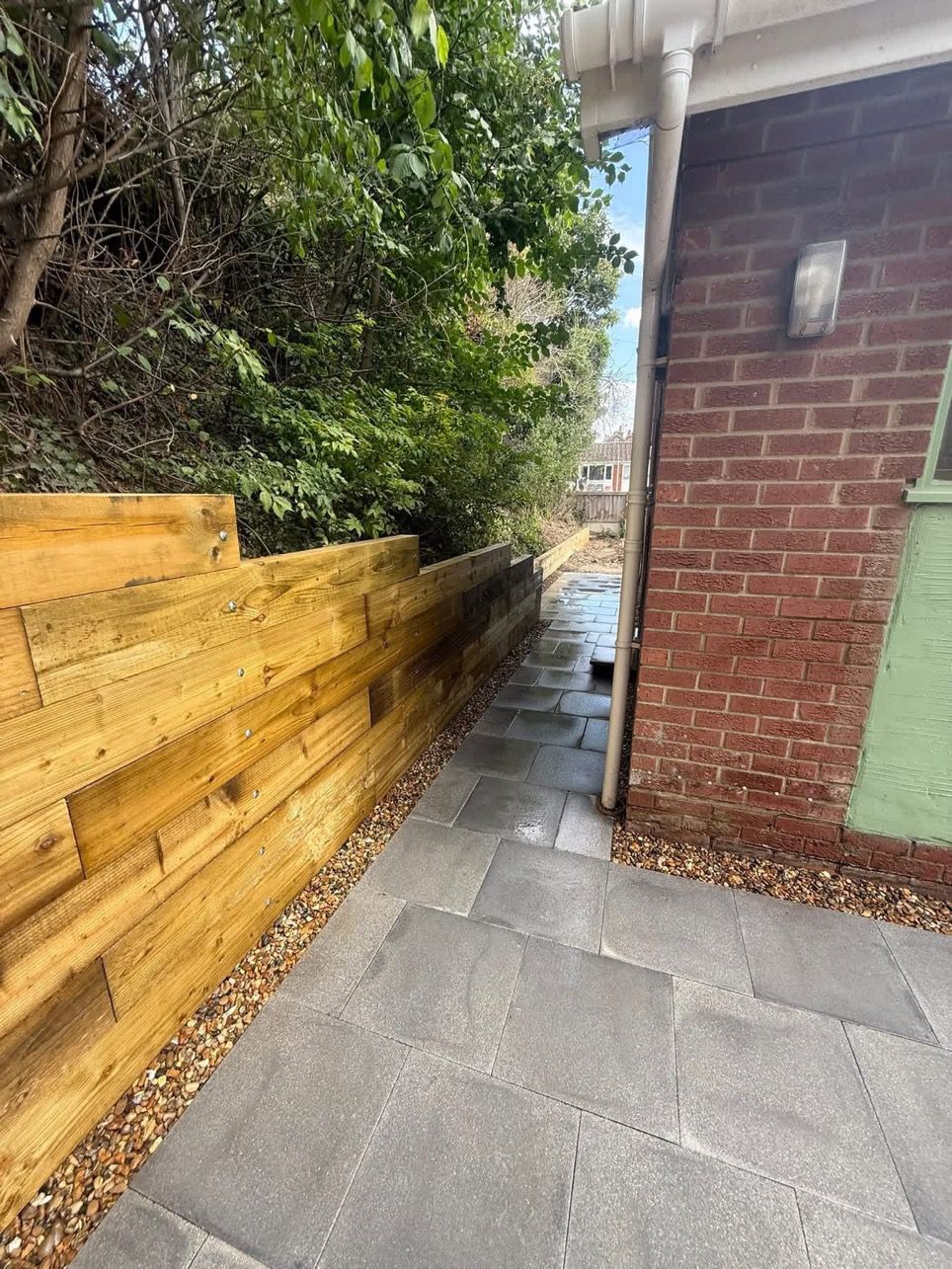
Timber Retaining Walls Suitable for lower terraces and informal garden areas. Pressure-treated timber walls are cost-effective and blend naturally into planted gardens. We typically use these for walls under 600mm.
Gabion Walls Wire cages filled with stone or aggregate create a modern, industrial aesthetic. They're excellent for drainage and work well on properties with significant water management challenges. Increasingly popular in contemporary garden designs across Glasgow.
Engineering and Drainage Considerations
A retaining wall isn't just a visual feature — it's a structural element that must resist significant soil pressure. Every retaining wall we build at Oaklands is designed with proper engineering principles:
• Adequate foundations — depth and width calculated based on wall height and soil type • Drainage behind the wall — French drains or weep holes to prevent hydrostatic pressure buildup • Proper backfill — free-draining material behind the wall rather than clay • Geotextile membrane — to prevent fine soil particles clogging the drainage layer
Glasgow's heavy clay soil creates particularly high lateral pressure, so walls in this area often need more robust construction than those built on sandy or loamy ground. This is where local experience matters — we understand the soil conditions across every area we serve.
Planning Permission and Building Regulations
In Scotland, retaining walls over 1 metre in height adjacent to a road or public footpath, or over 2 metres elsewhere, typically require a building warrant. Some situations may also require planning permission, particularly in conservation areas.
We handle the regulatory aspects of retaining wall projects as part of our service. For significant structures, we work with structural engineers to produce calculations and drawings that satisfy building control requirements.
This is particularly relevant for properties in Bearsden, Milngavie, and Helensburgh where many gardens sit in conservation areas with additional planning controls.
Cost Factors for Retaining Walls in Glasgow
Retaining wall costs vary significantly based on several factors:
• Wall height — taller walls require deeper foundations and stronger construction • Material choice — natural stone costs more than concrete block or timber • Access — restricted access increases labour time and cost • Ground conditions — rocky ground or high water tables add complexity • Length — longer walls benefit from economies of scale
As a rough guide, retaining walls in Glasgow typically range from £150–£400 per linear metre depending on the above factors. We always provide detailed, itemised quotations before starting any work.
The investment is almost always worthwhile. A well-built retaining wall that creates a usable patio terrace can add £10,000–£20,000 to a property's value while dramatically improving your outdoor living experience.
Transform Your Sloped Garden Today
If you're tired of looking at a sloped garden you can't use, retaining walls are the answer. We've transformed hundreds of sloped properties across Glasgow, Dumbarton, Clydebank, and the surrounding areas.
Contact us for a free site assessment. We'll survey your garden, discuss your goals, and provide a detailed proposal with clear pricing. There's no obligation and no pressure — just honest, expert advice from a team that's been solving sloped garden challenges for years.
Frequently Asked Questions
How high can a retaining wall be without planning permission?
Generally up to 1m adjacent to a highway or 2m elsewhere. However, local conditions may vary — we'll advise on your specific situation during our free assessment.
How long does a retaining wall last?
A properly built stone or concrete retaining wall should last 50+ years. Timber walls typically last 15–20 years depending on the treatment and exposure.
Can you build retaining walls in winter?
Yes, though we avoid pouring concrete foundations during severe frost. Most retaining wall projects can proceed through the Scottish winter with appropriate precautions.